Pakistani Trouser Styles: Shalwar, Gharara, Farshi and Culottes
A modest guide to Pakistani trouser styles: shalwar, straight pants, culottes, palazzo, cigarette pants, gharara, sharara and farshi, plus pairing tips.
Quick summary
- The trouser (shalwar, pajama or pant) is the base of every Pakistani outfit, and its shape changes how modest, comfortable and dressy the whole look feels.
- For everyday wear, the classic loose shalwar, straight trousers, culottes and wide-leg palazzos are the easiest modest choices.
- For Eid and weddings, the gharara, sharara and farshi shalwar add a graceful, floor-length flow.
- Slim cigarette pants work modestly only under a long, loose kameez that reaches the knee or below, and in an opaque fabric.
- Match the trouser to the kameez: a long A-line shirt suits slim or straight trousers, a short kurti suits a full gharara, and a straight shirt suits almost everything.
Why the trouser shape matters
When people think of a Pakistani outfit, they often picture the kameez and the dupatta first. Yet the trouser quietly decides a lot. It sets the outline of the lower half, changes how the kameez hangs and decides whether you can sit, walk and pray comfortably all day.
A good modest trouser does three things well. It is loose enough that it does not cling, long enough to reach the ankle or floor, and opaque enough that you never need to worry about light behind you. Within those rules, Pakistani tailoring offers a lovely range of shapes, from the everyday cotton shalwar to the swishing festive gharara.
This guide walks through the main trouser styles, when to wear each one, how to pair them with different kameez cuts and the small tailoring details that make a big difference.
Everyday trouser styles
The classic shalwar
The shalwar is the original Pakistani trouser. It is cut very full through the seat and legs, then gathered into a narrow cuff (the poncha) at the ankle. The extra fabric falls in soft folds, so it never shows the shape of the legs, and it is wonderfully comfortable for sitting on the floor, praying and travelling.
- Best for: daily wear, home, family visits, hot weather and long journeys.
- Pairs with: straight and A-line kameez of almost any length.
- Variations: the Patiala shalwar has deep pleats and more fabric; the tulip shalwar has an overlapping, petal-like front at the hem.
Straight trousers
Straight trousers have an even width from hip to ankle, usually with a hem of 16 to 20 inches. They look neat and modern, and they are the most popular choice for office wear and university. Ask for a relaxed fit through the hip so the fabric falls straight instead of hugging the body.
- Best for: work, errands, school runs and smart casual days.
- Pairs with: straight, long A-line and band-collar kurtas.
Our office wear guide has full work outfit ideas built around straight trousers.
Culottes
Culottes are wide, flowing trousers that stop just above the ankle. They feel light and breezy and look fresh with printed lawn shirts. For full coverage, choose a length that reaches the ankle bone, or wear them with khussa or closed shoes and socks in cooler months.
- Best for: summer days, casual outings and relaxed family lunches.
- Pairs with: straight and slightly shorter kurtas.
Palazzo and wide-leg trousers
The palazzo is cut wide from the hip and falls straight to the floor. Because the fabric hangs away from the body, it is one of the most naturally modest trouser shapes. In cotton or linen it suits everyday wear; in georgette or crepe it can look quite formal.
- Best for: hot climates, travel and anyone who prefers a fluid, loose line.
- Pairs with: long straight shirts, kaftan-style tops and A-line kurtas.
Cigarette pants, worn modestly
Cigarette pants are slim, straight trousers that end at the ankle. They are popular with long frocks and A-line shirts because they balance a very full kameez. On their own they can feel too fitted, so we suggest a few simple rules.
- Wear them only under a long, loose kameez that reaches the knee or below.
- Pick an opaque, slightly heavier fabric such as cotton twill, cambric or khaddar, never thin stretch knits.
- Leave a little ease at the thigh and knee so they skim rather than cling.
- Choose a side slit on the kameez that stops at the hip, not higher.
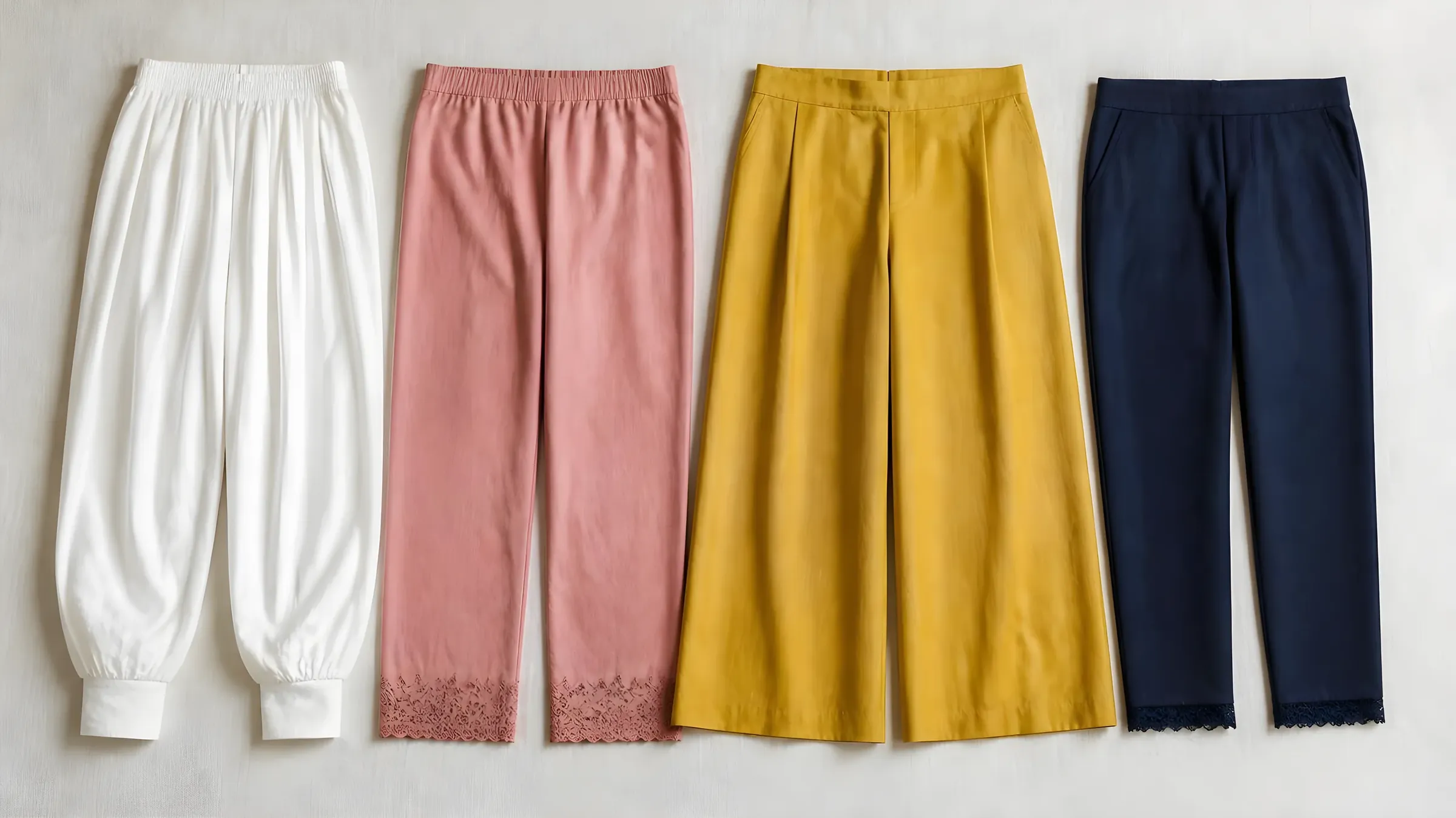
From left: a classic gathered shalwar, straight trousers with a lace poncha, wide-leg culottes and slim cigarette pants. Each shape changes how the kameez falls.
Festive trouser styles
The gharara
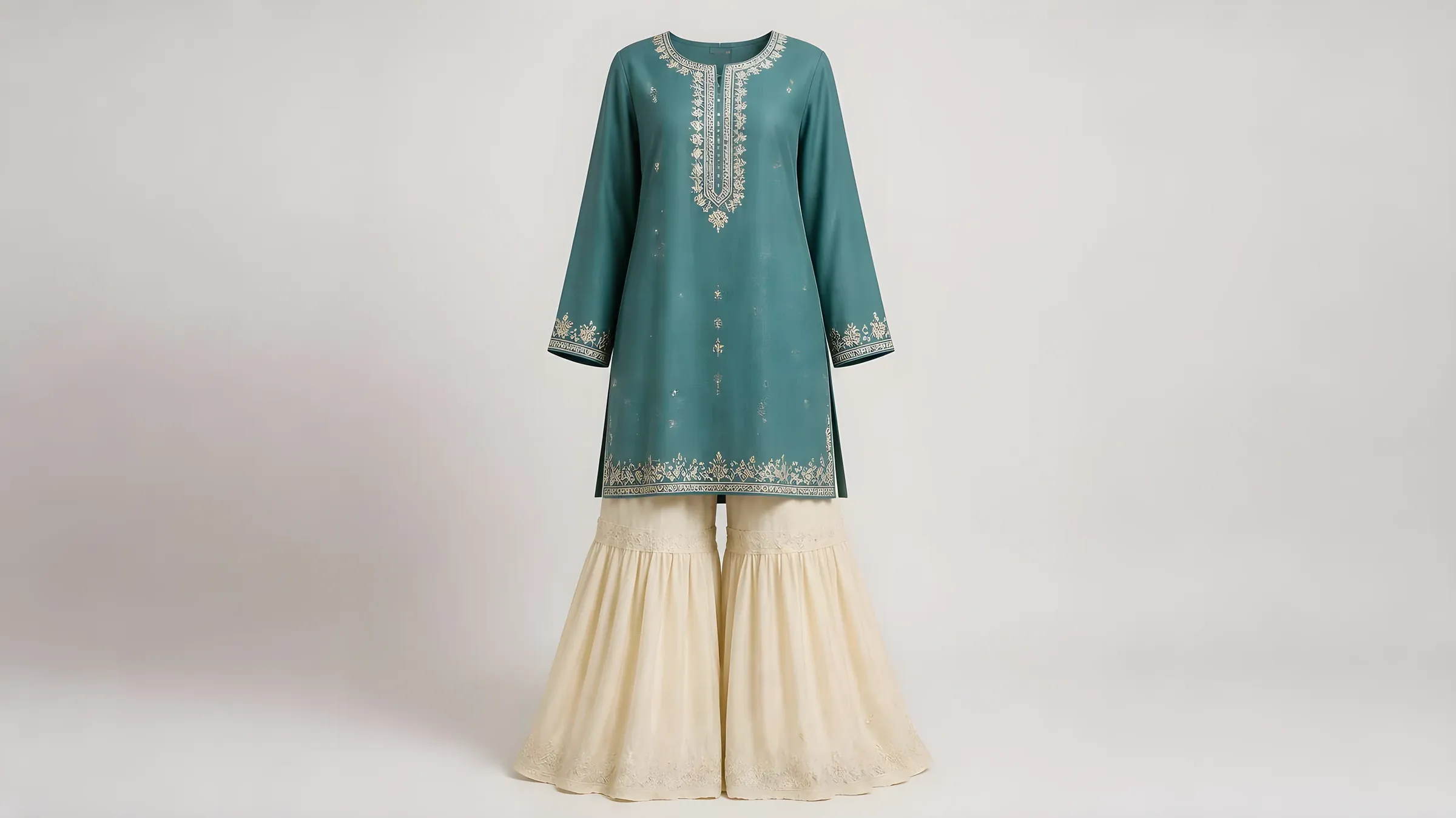
The gharara is fitted from the waist to the knee, then flares out into wide, gathered panels that reach the floor. A band of embroidery, lace or gota usually sits at the knee where the flare begins. It is a timeless choice for nikah, walima and Eid, and it gives even a simple kurta a rich, celebratory feel.
- Best for: weddings, Eid and formal family events.
- Pairs with: short to mid-thigh kurtis and straight shirts, as in the photo at the top of this guide.
- Modesty tip: keep the upper part relaxed rather than tight, and choose a kameez that comfortably covers the hips.
The sharara
The sharara looks similar to a gharara but flares out from the hip instead of the knee. The result is a softer, more even fall of fabric, a little like a long divided skirt. Many women find it easier to walk and sit in than a gharara, and it is very forgiving for every body shape.
- Best for: wedding guests, Eid evenings and festive dinners.
- Pairs with: mid-length straight shirts and short peplum-style tops with full sleeves.
The farshi shalwar
The farshi shalwar (sometimes called farshi gharara) is the grandest of them all. It has wide, pleated legs and a long length that gently sweeps the floor; farsh means floor. It was a favourite of royal courts and is now a classic for bridal families and formal walima events.
- Best for: weddings and very formal occasions.
- Pairs with: short, fitted-to-the-hip kurtis with full coverage at the neckline and sleeves, plus a large dupatta.
- Practical tip: keep the length just touching the floor in front so you can walk safely, and choose a lighter fabric such as chiffon or organza over a cotton lining.
For complete festive looks, see our modest wedding looks and Eid outfit ideas.
Pairing trousers with kameez cuts
The easiest way to balance an outfit is to pair a full piece with a slimmer one. Here is a quick pairing guide.
- Long A-line or frock kameez: straight trousers or cigarette pants, so the flare of the shirt stays the focus.
- Straight kameez (knee length): almost anything, from a shalwar to culottes, palazzos or straight trousers.
- Short kurti (mid-thigh): gharara, sharara or farshi shalwar for festive days; a wide palazzo for everyday.
- Angrakha and peshwas: slim straight trousers or cigarette pants, because these shirts already carry a lot of volume.
- Kaftan-style tops: straight trousers or a soft palazzo in the same colour for a long, unbroken line.
Our kameez cut styles guide explains each shirt shape in more detail.
Hem and poncha details
The hem of the trouser, called the poncha, is a small area with a big impact. When the kameez is plain, a detailed poncha adds just enough interest at the ankle to finish the look.
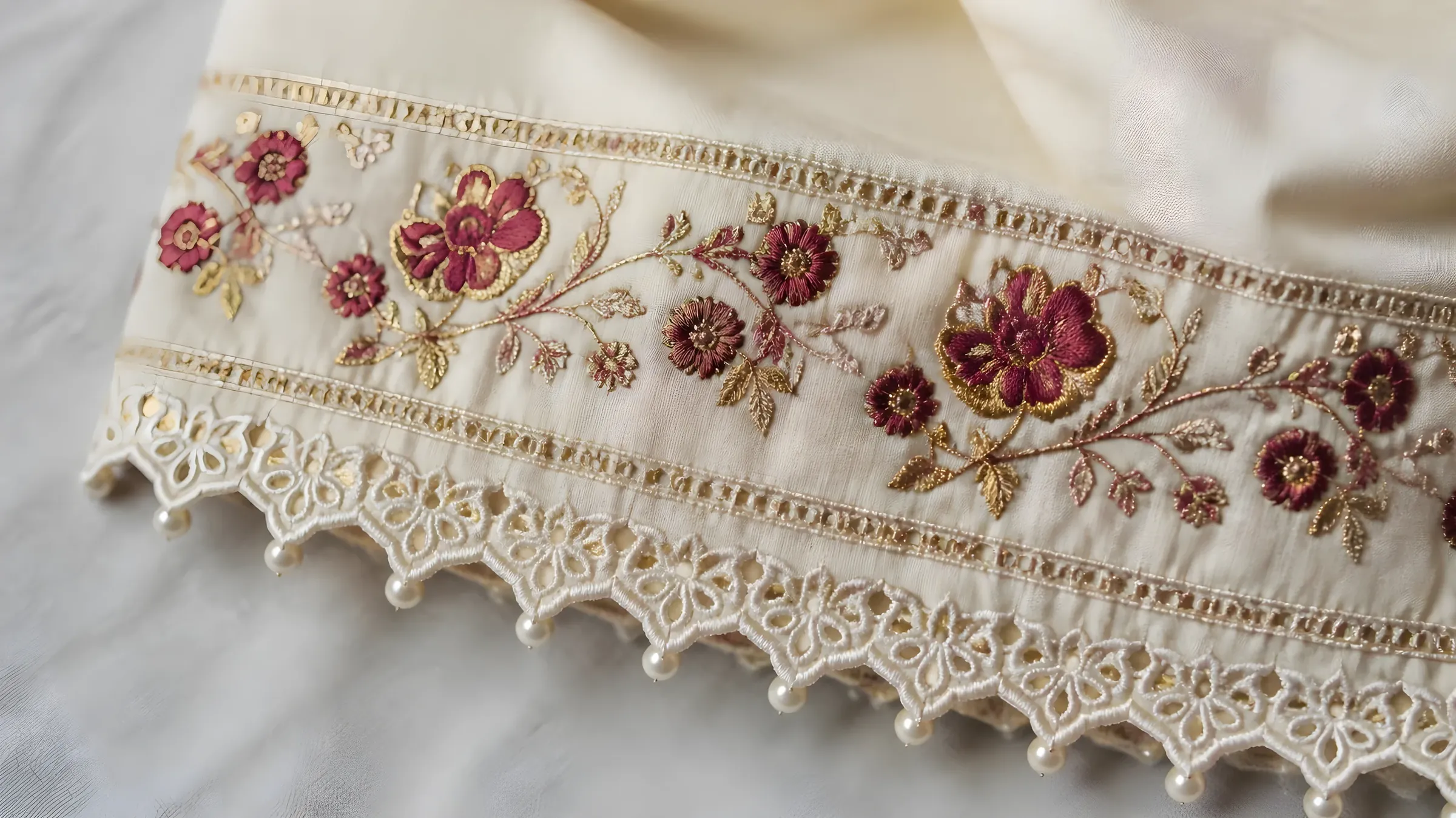
Detail view: an embroidered poncha with a cutwork edge and tiny pearls adds a festive finish at the ankle, even with a plain kameez.
- Embroidered bands: a strip of thread embroidery a few inches above the hem, often matching the neckline of the kameez.
- Lace and cutwork: scalloped or eyelet edges that look delicate on cotton and lawn.
- Pearls and small beads: a light row along the edge adds sparkle for Eid without feeling heavy.
- Gota and piping: a thin border in a contrast colour gives a neat, tailored finish.
- Small slits: a short side slit at the ankle of straight trousers helps them fall straight; keep it no higher than the ankle bone.
To learn more about stitch styles, read our guide to embroidery and prints in Pakistani design.
Choosing the right fabric
The same cut can look completely different in another fabric, so choose with the season and occasion in mind.
- Cotton and cambric: the everyday all-rounders. Breathable, opaque and easy to wash.
- Lawn: light and cool for summer, but often sheer in pale colours, so add a lining or choose a darker shade.
- Linen and khaddar: great for straight trousers and palazzos, with structure that stops the fabric clinging.
- Raw silk, jamawar and brocade (for women): rich and festive for gharara and farshi styles.
- Chiffon, organza and net: beautiful for festive flares, always over a full, opaque lining.
Our fabrics guide covers each fabric in depth. For men, the classic loose shalwar in cotton, wash-and-wear or wool blends remains the standard; see our men's shalwar kameez guide.
Trousers by occasion
Daily wear and home
A cotton shalwar or soft palazzo is the most comfortable choice. Both allow easy movement for chores, prayer and sitting on the floor.
Work and study
Straight trousers in cotton, cambric or a crepe blend look polished and practical. Keep colours calm and the hem neat.
Eid and family gatherings
Try a sharara or a gharara with a short or mid-length kurti, or dress up straight trousers with an embroidered poncha.
Weddings
The farshi shalwar and gharara are the classic choices. Line sheer fabrics fully and keep the kameez and dupatta generous.
Travel and Umrah
Choose a loose cotton shalwar or a wide palazzo in a dark, crease-resistant fabric. Avoid heavy embellishment and floor-sweeping lengths that pick up dust.
Tailoring tips for a modest, comfortable fit
- Measure the hip with ease: add at least 4 to 6 inches of ease to the hip measurement for straight trousers so they never cling.
- Check the length while seated: a trouser that looks right standing can ride up when you sit. Ankle length or longer is best.
- Ask for a lining: any light or sheer fabric should be lined to the hem.
- Choose elastic plus drawstring: a combined waistband is comfortable and secure, especially for heavier festive trousers.
- Hem to suit your shoes: finish floor-length styles while wearing the shoes you plan to use, so the hem neither drags nor shows the ankle.
- Order extra fabric: gharara and farshi styles need around 4 to 6 metres, so confirm the quantity with your tailor before cutting.
Key takeaways
The right trouser makes a Pakistani outfit feel balanced, comfortable and modest from head to hem. Lean on the classic shalwar, straight trousers, culottes and palazzos for daily life, and save the gharara, sharara and farshi shalwar for Eid and weddings. Wear slim cigarette pants only under a long, loose kameez, line any sheer fabric and let the poncha add a quiet touch of detail. With a few well-cut pairs in your wardrobe, every kameez you own gains a new look.