Modest Office Wear for Women: Pakistani Kurta Designs for Work
Professional, comfortable and fully modest work outfits: kurta cuts, band collars, wide trousers, fabrics, colours and a five-day office capsule.
Why office wear needs its own modest wardrobe
Many women who wear Pakistani clothing spend most of their week at work: in offices, banks, schools, hospitals, shops and government departments, in Karachi and Lahore as well as Dubai, Sharjah and Abu Dhabi. Festive suits with heavy embroidery and delicate chiffon are lovely for weddings, but they are not practical for a nine-hour day at a desk, a long commute or a busy clinic. Office wear asks for something different: clothes that look professional and calm, stay comfortable from morning to evening, and keep the full, loose coverage that modest dressing requires.
The good news is that the Pakistani wardrobe already holds everything a working woman needs. A well-cut kurta, sensible trousers and a light dupatta or scarf can look as polished as any blazer and skirt, while being far more comfortable and far more modest. The secret lies in the cut, the fabric and a disciplined colour palette.
The ideal office kurta silhouette
The most useful work kurta is a straight or gently A-line shape that falls below the knee, ideally to mid-calf. This length covers the figure fully when you sit, stand, bend to pick up files or climb stairs. Side slits should start low, around the knee, so that the kurta moves easily without opening too much when you walk.
Ease matters more than anything. A work kurta should skim the body rather than follow it. Ask your tailor for comfortable room through the chest, shoulders and upper arms, so the fabric never pulls across the front when you reach for a keyboard or carry a bag. Princess seams and darts that sculpt the waist look smart on a hanger, but a relaxed fit with soft side panels is more modest and far more comfortable through a long day.
Sleeves should be full length. A slightly wider cuff, finished with a neat button or a simple band, can be folded back for wudu at prayer time and smoothed down again in seconds. Avoid tight, narrow sleeves that are difficult to push up.
Necklines and collars that look professional
The neckline sets the tone of an office outfit. A short band collar, sometimes called a Chinese or mandarin collar, is one of the most professional choices in modest Pakistani design. It sits close to the base of the neck, frames the face neatly and pairs beautifully with a scarf or dupatta. A high round neck with a short placket is another clean option, as is a modest shirt collar that echoes Western office wear without losing the kurta shape.
Deep V-necks, wide boat necks and keyhole cuts are best kept away from work wardrobes. If a design you love has a lower neckline, a simple inner layer or a tailored change at the stitching stage solves the problem without sacrificing style.
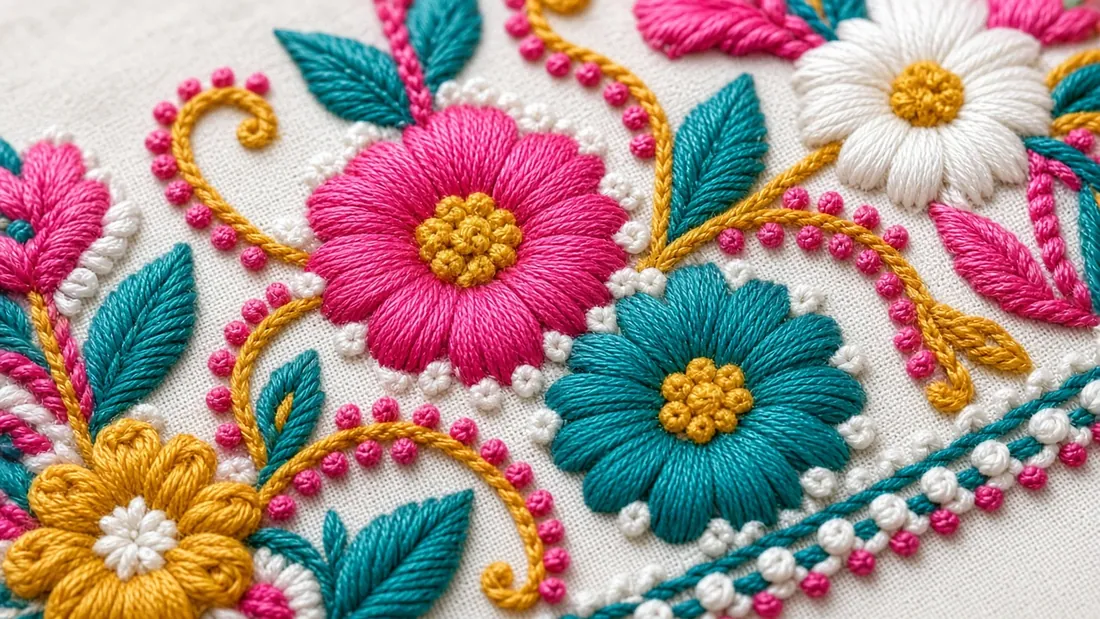
Detail view: for the office, keep embroidery like this small and placed on the collar, placket, cuffs or hem.
Trousers that work as hard as you do
The trouser is where office comfort is won or lost. Wide straight trousers, sometimes called straight pants or cigarette pants with a generous cut, are the most versatile choice. They look tailored, hang cleanly over flat shoes and give plenty of room to sit and move. Culottes that fall to the ankle, palazzo trousers in a heavier fabric and a classic relaxed shalwar also work well, particularly in warmer weather.
Choose trousers in opaque fabrics that do not cling when you sit. A soft elastic waistband with a drawstring, or a flat front with side elastic, keeps the line smooth under the kurta. Very tight churidar or skinny trousers are better saved for occasions where a long, full kurta or abaya will cover them completely.
Fabrics for a full working day
Office fabrics need to breathe, resist creasing and stay opaque. Cotton is the everyday champion: cambric and lawn are cool in summer, while a slightly heavier cotton or khaddar suits cooler months and heavily air-conditioned buildings. Cotton-linen blends have a crisp, refined texture that looks wonderfully professional, though pure linen creases quickly, so a blend is usually more practical.
Viscose and rayon blends drape softly and resist wrinkles on long commutes, and good-quality polyester crepe or georgette with a lining can work for presentations and formal meetings. Whatever the fabric, hold it up to the light before buying. If you can see your hand clearly through it, it will need a lining or a slip to stay modest under strong office lighting.
A calm, professional colour palette
Work wardrobes look best when they are built around a few quiet colours that mix easily. Navy, charcoal, soft grey, olive, sage, camel, dusty blue, ivory and muted maroon all read as confident and professional. Choose two or three base colours for trousers, usually ivory, black, navy or grey, then add kurtas in harmonious shades so that every top works with every bottom.
Bright colours and bold prints are not forbidden at work; they simply need balance. A mustard or teal kurta looks smart with plain ivory trousers and a neutral scarf. Large florals and very busy prints are best kept for weekends, while small geometric repeats, fine stripes, subtle block prints and tonal checks suit the office perfectly.
Embroidery and detail, kept understated
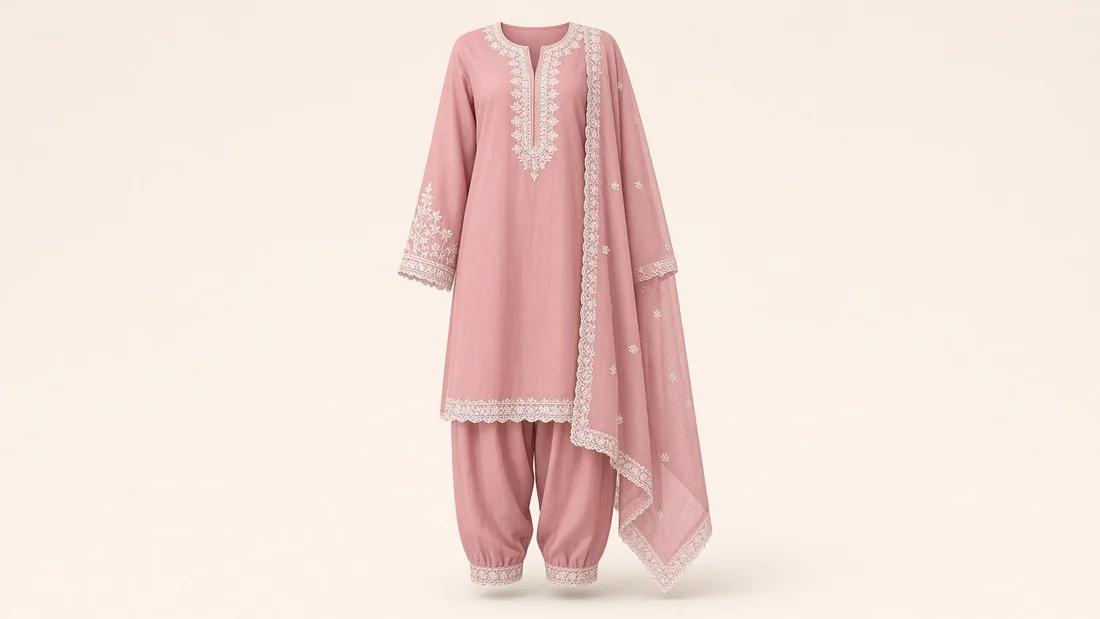
An office kurta does not have to be plain. Tonal thread embroidery, where the stitching is the same shade as the fabric or only slightly lighter, adds beauty without looking festive. Keep embroidery to the collar, placket, cuffs and hem border. Neat pin-tucks, piping in a contrasting colour, covered buttons and simple lace inserts on the sleeve are other tasteful touches. Mirror work, sequins, heavy zari and large motifs are best saved for weddings and Eid.
Dupattas, scarves and the hijab at work
A full, heavy dupatta can be awkward at a desk or around machinery, so many working women prefer a lighter option. A medium-weight cotton or modal scarf, a jersey hijab that stays in place all day, or a narrower dupatta draped neatly over the shoulders all work well. Pins and magnetic clasps keep fabric secure so it does not slip while you type or move around. For hijab-wearing women, a band collar or high round neck sits comfortably under the hijab and keeps the outline neat.
Layers for meetings and cold offices
Air-conditioned offices in the Gulf can be surprisingly cold, and a smart layer also helps on days with important meetings. A long open-front shrug, a loose knitted cardigan that falls below the hip or a lightweight open abaya in a neutral tone adds warmth and authority without making the outfit tight. In winter, a soft wool shawl or a longline coat over a khaddar kurta keeps you warm on the way to work.
Building a five-day work capsule
A simple capsule makes mornings easy. Start with three pairs of trousers in ivory, black and navy. Add five kurtas in coordinating colours, perhaps sage, navy, dusty blue, camel and a soft print. Choose two scarves or dupattas in neutral shades and one long cardigan or shrug. With just these pieces you can create more than two weeks of different outfits, all modest and all professional. To keep everything organised, a set of slim velvet hangers stops kurtas slipping and keeps collars in shape, and a compact handheld garment steamer removes creases from cotton and linen in minutes before you leave the house.
Key takeaways
Modest office wear in the Pakistani tradition is built on a few clear ideas: a loose, below-the-knee kurta with full sleeves; a professional band collar or high neckline; wide, opaque trousers that allow easy movement; breathable, crease-resistant fabrics; a calm palette of mix-and-match colours; and embroidery kept subtle. With a small, thoughtful capsule, every working day can begin with an outfit that feels comfortable, graceful and completely appropriate.
Some links on this page are affiliate links. As an Amazon Associate I earn from qualifying purchases, at no extra cost to you.