Kameez Cut Styles Explained: A-Line, Straight, Angrakha, Peshwas and Frock Designs
A modest guide to Pakistani kameez cuts: straight, A-line, angrakha, peshwas, frock and kaftan styles, with lengths, sleeves, fabrics and tailoring tips.
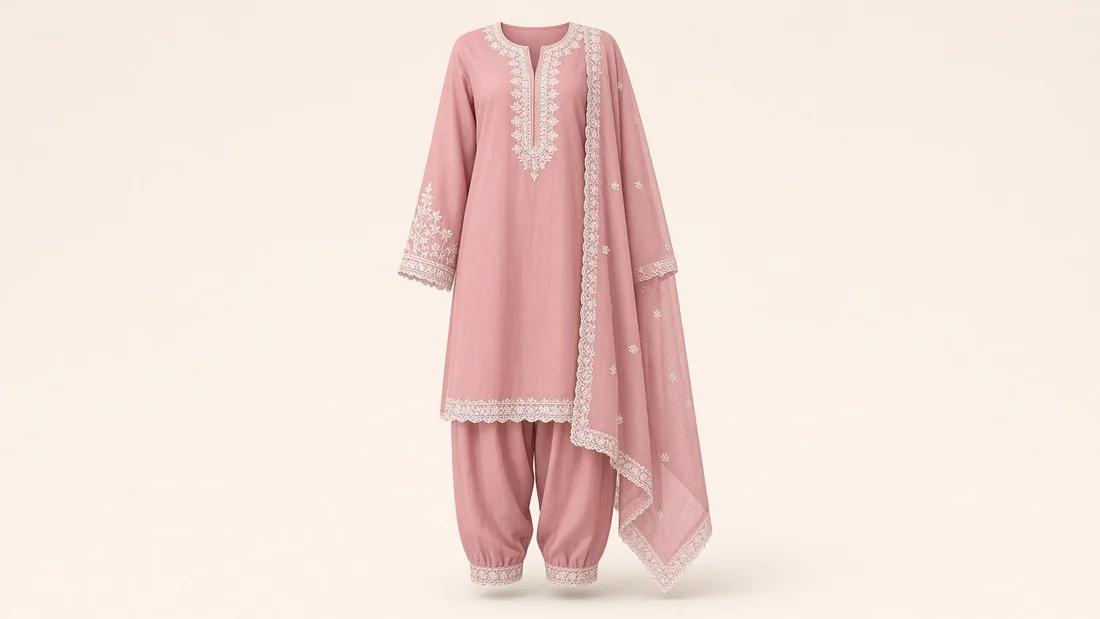
Why the cut matters more than the print
When women choose Pakistani clothing, the first thing that catches the eye is usually the colour or the embroidery. Yet the real character of an outfit comes from its cut. Two suits made from the same lawn print can look completely different: one crisp and professional, the other flowing and festive. The cut also decides how modest an outfit feels in real life, because it controls how the fabric falls when you sit, walk, bend and pray.
This guide walks through the most popular kameez cut styles in Pakistani design, from the everyday straight shirt to the graceful angrakha and the full peshwas. For each one we look at how it is shaped, when to wear it, which fabrics suit it best and how to keep it loose and fully covering.
The straight kameez
The straight cut is the backbone of most Pakistani wardrobes. It is shaped from two main panels with side seams that run almost parallel from the underarm to the hem, and side slits that let the shirt move. A straight kameez looks neat, tailored and easy to style, which is why it appears in office wear, university outfits and everyday lawn suits.
For a modest straight kameez, ask for generous ease through the chest, waist and hips so the shirt skims the body instead of outlining it. Keep the length below the knee and start the slits low, around knee level. Cotton, cambric, lawn and khaddar all hold this shape well. Pair it with wide straight trousers or a relaxed shalwar rather than tight cigarette pants, and the silhouette stays clean and covered.
The A-line kameez
The A-line cut is narrow at the shoulders and widens gently towards the hem, like the capital letter A. Side panels, called kalis in some designs, are added to create the flare. Because the fabric moves away from the body below the chest, A-line shirts are one of the most naturally modest shapes in Pakistani fashion. They flatter almost every figure and feel cool in hot weather, as air moves freely under the shirt.
A mid-calf A-line kameez with full sleeves and a band collar is a lovely all-rounder for Dubai summers, family visits and school runs. Softer fabrics like lawn, voile with a lining, viscose and light linen blends drape beautifully in this cut. Avoid very stiff fabrics, which can make the flare stand out too far and look boxy.
The angrakha: an elegant wrap
The angrakha is one of the oldest and most graceful styles in the subcontinent. Its front panels overlap and fasten at the side, traditionally with fabric ties or tassels, creating a soft diagonal line across the chest. Modern angrakha designs often combine this wrap bodice with a flared or straight lower body, and the overlapping edge is a perfect place for delicate embroidery, piping or lace.
The main point to watch with an angrakha is coverage at the neckline. A deep wrap can open when you move, so choose a design where the panels overlap generously, ask your tailor to add an inner hook or snap, and finish the neck with a short band collar or a high round edge. Done well, an angrakha looks festive enough for Eid and dawats while remaining completely modest.
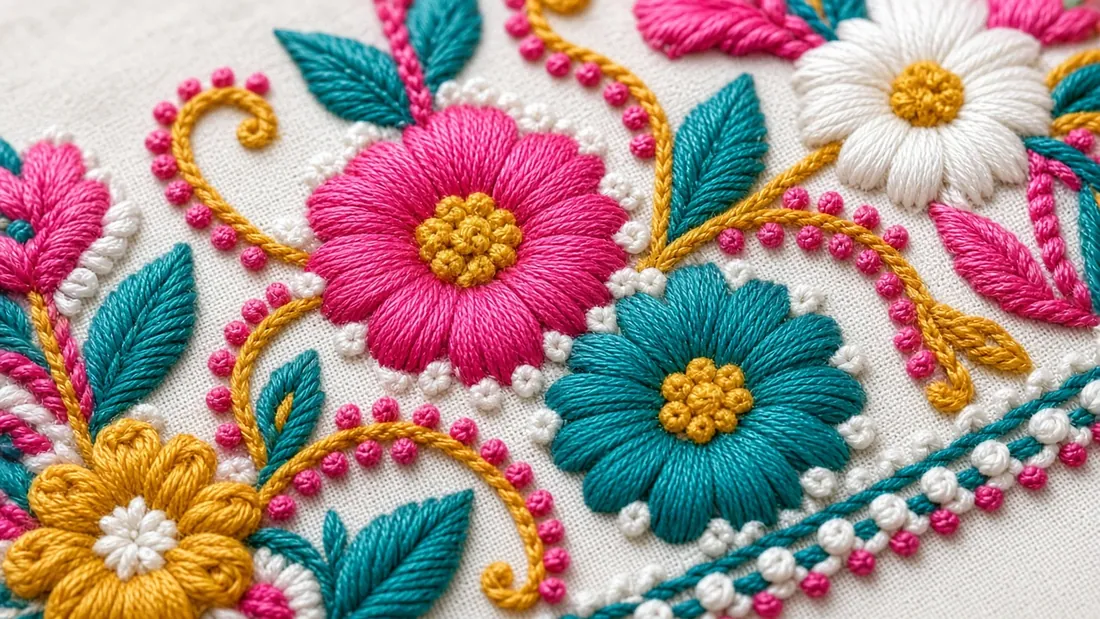
Detail view: fine thread embroidery like this looks beautiful along the overlapping edge of an angrakha or the yoke of a peshwas.
The peshwas: full and flowing
The peshwas is a long, full-skirted kameez with a fitted yoke above the waist and a generously gathered or panelled skirt below, often reaching the ankle. It has roots in Mughal court dress and is a favourite for weddings, mehndi and walima functions. The many panels create a soft, swirling movement that looks regal without needing tight fitting anywhere.
To keep a peshwas modest, make sure the bodice is not body-hugging: a little ease through the chest and an empire or natural waistline that sits comfortably is ideal. Because the skirt uses a lot of fabric, choose lightweight but opaque materials such as lined chiffon, organza over cotton, or soft net with a full lining. A long dupatta draped over the head or shoulders completes the look. Men should remember that peshwas is a women's style; for men, the equivalent formal choice is a long kurta with a waistcoat, without silk or gold.
The frock and gown kameez
The frock cut is a close cousin of the peshwas, usually slightly shorter and simpler. It may fall to the knee or mid-calf and is shaped with a high waist seam and a flared skirt. Frocks are popular for younger women and for semi-formal events because they look youthful and lively. Choose versions with full sleeves, a modest neckline and enough length to cover the figure when sitting, and pair them with straight trousers or a churidar covered fully by the long skirt.
The kaftan and relaxed shirt
Kaftan-style kameez designs are cut wide from shoulder to hem, often with dropped shoulders and batwing-like sleeves. They are extremely comfortable, very loose and perfect for home, travel and hot afternoons. A kaftan in printed lawn or soft cotton with a straight trouser is one of the easiest modest outfits to wear. Look for designs with sleeves that reach the wrist and side seams that are stitched closed at least to hip level for full coverage.
Choosing the right length
Length changes the mood of every cut. Short shirts above the knee are trend-led but need very loose trousers and often a long dupatta or open abaya to remain modest. Knee-length shirts are practical for daily wear. Mid-calf and ankle lengths are the most graceful and the most covering, and they suit A-line, angrakha, peshwas and frock styles particularly well. As a simple rule, the more fitted the trouser, the longer and looser the kameez should be.
Sleeves and necklines that complete the cut
Full-length sleeves are the modest standard. Straight sleeves suit straight and A-line shirts; bell sleeves and gathered cuffs add drama to peshwas and frocks; wide kaftan sleeves feel airy in the heat. Cuffs that open with a button or a short slit make it easy to push sleeves up for wudu. For necklines, band collars, high round necks, short plackets and boat necks raised a few centimetres all work beautifully. Ask for a lining or an inner layer if a design you love has a deeper cut.
Tailoring tips for a perfect modest fit
Take a kameez you already find comfortable to your tailor as a reference, and ask for the same ease in every new cut. Mention clearly that you want the shirt to skim, not cling, and check the fit while sitting down as well as standing. For flared styles, ask for the hem to be finished evenly so it does not dip at the sides. A good fabric measuring tape helps you note your favourite measurements at home, and a set of sharp fabric scissors is handy for trimming threads and small alterations.
Key takeaways
Every kameez cut has its place in a modest Pakistani wardrobe. The straight shirt is neat and practical, the A-line is cool and flattering, the angrakha is elegant when its wrap is secure, the peshwas and frock are perfect for celebrations, and the kaftan is pure comfort. Whichever you choose, keep the fit loose, the length generous, the sleeves full and the neckline modest, and the cut will do the rest of the work for you.
Some links on this page are affiliate links. As an Amazon Associate I earn from qualifying purchases, at no extra cost to you.