Dupatta Styling Guide: Modest Ways to Drape a Dupatta
How to choose, size, pair and drape a dupatta modestly: fabrics, seven draping styles, colour pairing, occasions and tips to keep it in place all day.
Quick summary
- The dupatta is the finishing piece of a Pakistani outfit and one of its most useful modesty tools: it covers the head, chest and shoulders in one length of fabric.
- Pick the fabric for the occasion: cotton and lawn for daily wear, chiffon and georgette for gatherings, organza and net for festive days, jersey or modal for work and travel.
- The most modest drapes cover the chest fully: the classic front drape, the head-and-shoulder drape, the shawl wrap and the pinned hijab-style drape.
- A plain kameez suits a printed or embroidered dupatta, and a busy kameez suits a plain one.
- Pins, a good length (about 2.25 to 2.5 metres) and a slightly heavier border keep a dupatta in place all day.
Why the dupatta matters so much
In Pakistani dress, the dupatta is far more than an accessory. It is the long scarf that completes the shalwar kameez, and it has always carried a quiet meaning of grace and modesty. A well-chosen dupatta can turn a simple lawn suit into a polished outfit, soften a strong colour, frame the face and add warmth on a cool evening.
Just as importantly, it is a practical modesty piece. One generous length of fabric can cover the head, chest, shoulders and upper arms, and it adjusts in seconds when you step into a mosque, greet elders or walk into a busy mall. Learning a few simple drapes means one dupatta can serve many settings.
This guide covers dupatta fabrics, sizes, colour pairing and the most useful modest draping styles, with tips to keep everything neat from morning until night.
Choosing the right dupatta fabric
Each fabric behaves differently once it is draped. Before choosing a style, think about where you are going and how long you will wear it.
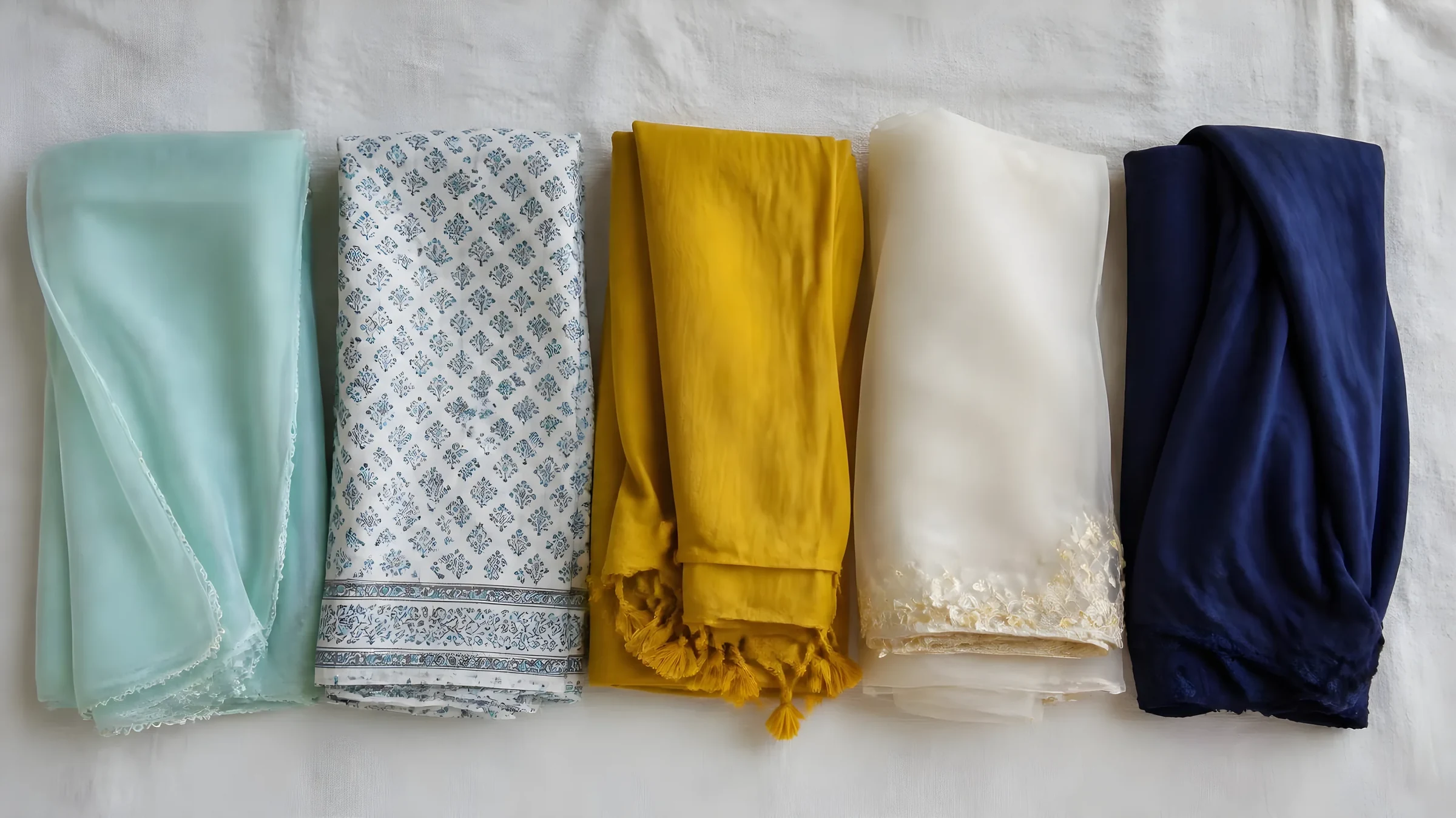
From left: sheer chiffon, printed lawn, tasselled cotton, embroidered organza and soft jersey. Each fabric drapes, covers and travels differently.
Cotton and lawn
Cotton and lawn dupattas are the everyday favourites. They are breathable, soft and opaque enough to cover well, and they stay in place without much effort. They suit school runs, errands, family visits and hot afternoons. Printed lawn dupattas pair beautifully with plain cotton shirts.
Chiffon and georgette
Chiffon is light, airy and flowing, which makes it a classic choice for gatherings and evening events. Georgette has a slightly heavier, grainier feel and drapes with more weight. Both are sheer, so for full coverage either fold them double over the chest or pair them with an opaque, high-neck kameez.
Organza, net and silk-look fabrics for women
Organza and net are crisp and festive, and they show off embroidered borders and scattered motifs very well. They suit Eid, nikah and walima outfits. Because they are stiff and see-through, they work best as a decorative layer over a fully covering kameez rather than as the only covering. Women may also wear silk or silk-blend dupattas for special days.
Jersey, modal and soft knits
For work, travel and long days out, a jersey or modal dupatta is wonderfully practical. It grips the head and shoulders, resists slipping and rarely creases. Many women who wear hijab prefer these fabrics because they can be pinned neatly and stay put through prayer, meetings and the commute.
Wool and pashmina-style shawls
In winter, a wool or wool-blend shawl often replaces the light dupatta. It does the same job of covering the head and upper body while keeping you warm. Our winter outfits and shawl guide covers shawl styling in more detail.
Getting the size right
Size makes a bigger difference than most people expect. A dupatta that is too short or too narrow cannot cover properly and keeps sliding off.
- Length: about 2.25 to 2.5 metres works for most drapes. Shorter pieces of around 2 metres suit casual cotton suits.
- Width: around 1 to 1.15 metres gives enough fabric to cover the head and chest together. Narrow stoles of 70 cm or less are better as a second layer.
- Borders: an embroidered or lace border adds a little weight at the edge, which helps the dupatta hang straight and stay in place.
- Tall or petite? Taller women can carry longer, wider dupattas; petite women often look neater in medium widths draped closer to the body.
Modest dupatta draping styles
Below are the most useful drapes for everyday modest dressing. All of them keep the chest covered, and most can be lifted over the head in a moment.
1. The classic front drape
Lay the dupatta across the front of the body so the middle sits over the chest, then bring both ends back over the shoulders to hang down the back. This is the traditional Pakistani drape. It covers the chest completely, stays put while you move and looks tidy with almost any kameez.
2. The open shoulder-to-front drape
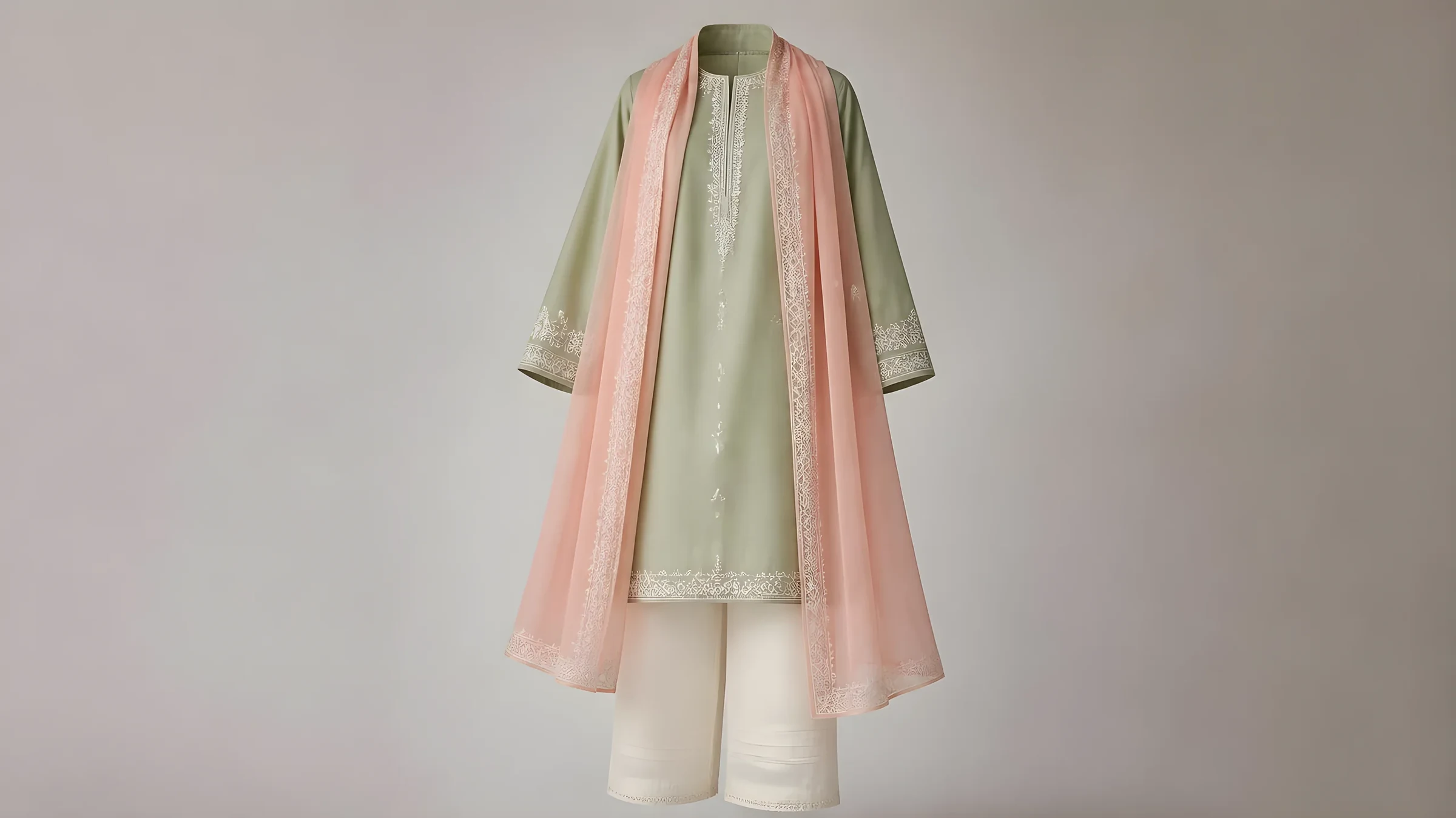
Place the centre of the dupatta behind the neck and let both ends fall straight down the front, as in the photo above. Pin each side lightly at the shoulder so the fabric does not slide. This looks graceful with long A-line shirts and shows off embroidered borders, while the wide panels still cover the chest.
3. The head-and-shoulder drape
Bring the dupatta over the head, loosely framing the face, and let one end fall over the front of the chest. Take the other end over the opposite shoulder so it crosses the front. This is the natural choice for mosque visits, prayers, condolence visits and gatherings with elders. Cotton, lawn and georgette hold this drape best.
4. The pinned hijab-style drape
For women who cover their hair fully, wear an under-scarf or cap first, then wrap a jersey or modal dupatta around the head and pin it under the chin. Let both ends fall forward over the chest, or take one end loosely around and pin it at the shoulder. Neat, secure and comfortable, this drape is ideal for work, university and travel.
5. The shawl wrap
Open the dupatta to its full width and wrap it around both shoulders like a shawl, letting it close over the front. This gives the fullest coverage of the arms and chest, and it is perfect for cool, air-conditioned malls and offices or evening events. Heavier cotton, karandi or wool-blend dupattas suit it best.
6. The festive cape drape
For weddings and Eid, a heavily embroidered dupatta can sit across the back of the shoulders, with both ends brought forward over the upper arms and chest and pinned discreetly at each shoulder. It shows the border beautifully and feels elegant, while the front stays covered. Add a light second scarf over the head if you want your hair covered.
7. The pleated single-shoulder drape, done modestly
Pleat the dupatta lengthwise and pin it on the left shoulder so the long end falls down the back. On its own this drape leaves the front open, so we suggest it only with an abaya, a high-neck jacket or a second covering scarf. With those layers, it adds a neat, formal finish.
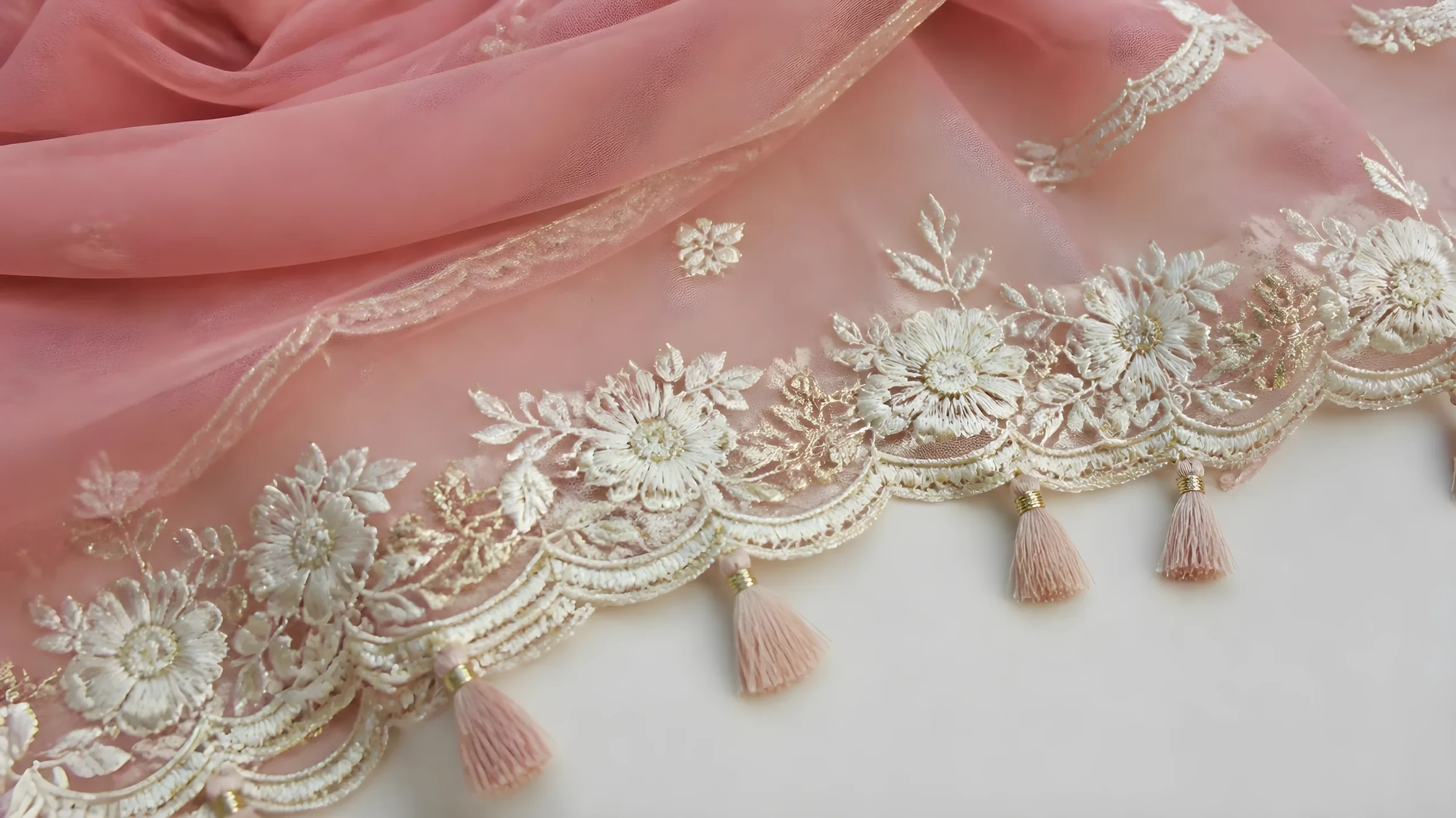
Detail view: a scalloped, embroidered border with small tassels gives a dupatta weight at the edge, so it hangs straight and frames the outfit.
Pairing your dupatta with the kameez
The dupatta and the kameez should feel like partners, not rivals. A few simple rules make pairing easy.
- Plain with printed: a solid kameez carries a printed, block-printed or embroidered dupatta beautifully.
- Busy with calm: if the shirt has bold prints or heavy embroidery, choose a plain or lightly bordered dupatta in one of its colours.
- Tonal sets: a dupatta a shade lighter or darker than the kameez looks soft and elegant, and it works well for office wear.
- Contrast sets: sage with dusty pink, navy with mustard, ivory with maroon and teal with coral are classic Pakistani pairings that feel fresh and lively.
- Match the trousers: picking up the trouser colour in the dupatta ties a three-piece outfit together neatly.
Our colour palettes guide has more ideas for combining shades across seasons.
Dupattas for different occasions
Everyday and errands
Choose a cotton or lawn dupatta in a soft print and use the classic front drape or a loose head-and-shoulder drape. It should be easy to adjust while carrying shopping bags or a child.
Office and university
A jersey, modal or light cotton dupatta in a calm, solid colour looks professional. A pinned hijab-style drape or a neat front drape with a pin at each shoulder keeps your hands free for work.
Eid and family gatherings
This is the moment for chiffon or organza with embroidery, gota or lace borders. A festive cape drape or open front drape shows the border, while a second light scarf can cover the hair.
Weddings
Heavier embroidered dupattas suit nikah and walima events. Pin them securely so you can greet guests, sit and eat without constant adjusting. Keep the coverage full over the chest and arms.
Travel and Umrah
For long journeys, choose a crease-resistant jersey or cotton dupatta in a dark or neutral tone. It works as head covering, extra layer on cold flights and a light wrap in the evening. Avoid heavy borders and loose embellishment that may catch on bags and seats.
Keeping your dupatta in place
A dupatta that slips all day is tiring to wear. These small habits make a big difference.
- Use two or three small safety pins or hijab pins: one at each shoulder and one at the chin or chest if needed.
- Choose fabrics with some grip, such as cotton, jersey and georgette, for long days.
- Fold sheer chiffon double for a more stable drape and better coverage.
- Ask your tailor to add a light lace, piping or tassel border; the extra weight helps it hang.
- Steam the dupatta before wearing. Creased fabric bunches and slides more easily than smooth fabric.
Caring for your dupattas
Dupattas are delicate and often embroidered, so gentle care keeps them looking new for years. Hand wash chiffon, georgette and organza in cool water with a mild detergent and dry them flat or on a line in the shade. Lawn and cotton can usually go in the machine on a gentle cycle inside a mesh bag. Heavily embroidered and festive pieces are best dry-cleaned.
Store dupattas loosely folded or rolled, with tissue paper between embroidered layers so the threads and tassels do not catch. Keep festive pieces in breathable cotton bags rather than plastic, and refold them now and then so permanent creases do not form along the same lines.
Key takeaways
The dupatta is one of the simplest ways to make any Pakistani outfit both beautiful and modest. Choose the fabric for the occasion, buy a length and width generous enough to cover the head and chest, and learn a few dependable drapes such as the classic front drape, the head-and-shoulder drape, the pinned hijab-style drape and the shawl wrap. Pair plain with patterned, use pins wisely and care for your pieces gently. With these habits, one good dupatta can take you from the school gate to the office to an Eid gathering with grace.